
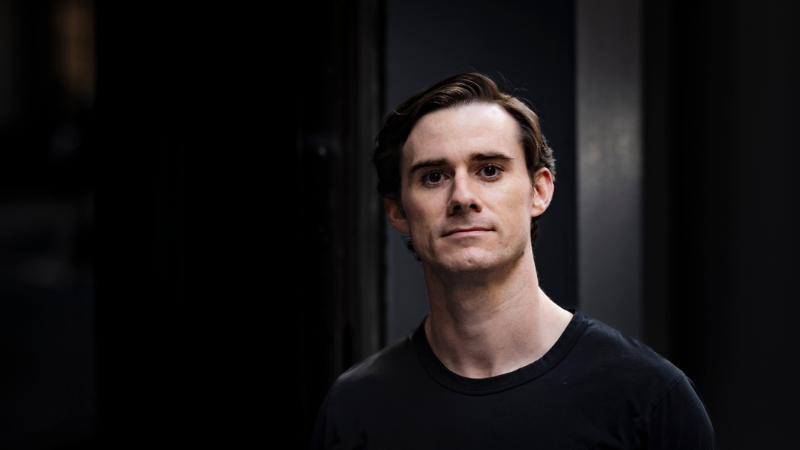
Image credit: Ashish Nagi
“ASTOR has been leaving his own distinct mark with each of his endeavours.” – We Rave You
“With a focus on creating music that connects and energizes, ASTOR’s trajectory is as compelling as his sound.” – EDM Nomad
Emerging electronic producer ASTOR is set to unveil his electrifying new single “Poison” on May 30th, 2025, via ASTOR Records.

Known for blending festival-sized energy with emotionally-charged melodies, ASTOR boasts over 2.16 million streams across platforms and a string of high-profile support slots at NOTO in Philadelphia, and The Summer Club in New York City, where he opened for the likes of Nicky Romero, Hardwell, Sam Feldt, Loud Luxury, and Julian Jordan. He has garnered attention from publications such as We Rave You and EDM Nomad. “Poison” follows his breakout 2024 releases “Fly Alone” and “Storm,” as well as 2025’s “Holding Tight,” which marked his debut signing with Revealed Radar, a sub-label of Hardwell’s Revealed Recordings. With “Poison” arriving as his boldest statement yet, ASTOR is clearly carving his name into the next wave of mainstage-ready talent.
Based in New York City, ASTOR’s path to the decks was not exactly typical. A finance professional and political analyst by day, his musical journey began during the pandemic; a personal pivot from structured routine to creative freedom. Influenced by legends like Martin Garrix, Alesso, Third Party, and DubVision, ASTOR crafts EDM soundscapes that marry melodic intricacy with explosive energy. His sound fuses the subtle emotionality of Progressive House with the huge, kinetic energy of Big Room and Electro House, drawing comparisons to acts like his inspirations as well as Avicii and Swedish House Mafia.
“Poison” packs a potent punch, delivering what is quickly becoming ASTOR’s signature blend of introspective emotional manifoldness and primal dancefloor euphoria. Soaring synths, pulsing rhythms, intricate melodies and thunderous drops create a charged yet cathartic experience for the listener. Eschewing the big primary-colour emotions that mainstage anthems often evoke, the track’s evocative production and impassioned vocals tell a sonic and lyrical story of being inexorably pulled towards something that is not good for you.
ASTOR divulged: “‘Poison’ still delivers the energetic, hard-hitting drops that I love producing, but the heart of the track lives in its darker, more emotional core. The breakdowns and build-ups lean into a moodier, almost haunting vibe—driven by twisted arps, cinematic piano lines, and lyrics about obsession that really stuck with me. It’s about that feeling of knowing something isn’t good for you but being drawn to it anyway. I wanted the whole track to feel like a beautiful kind of chaos—seductive, intense, and hard to escape.”
For more information about ASTOR, go to:
Website | Instagram | Facebook | SoundCloud | YouTube | Spotify
ASTOR, a New York City based DJ and producer, is quickly becoming an up-and-coming name in the dance music scene. Well suited for playing to both club and festival crowds, ASTOR combines elements of progressive, electro house and big room sounds.
Meet ASTOR, a New York City-based DJ and producer who’s quickly making a name for himself in the dance music scene. His sound blends progressive, electro house, and big room vibes, creating high-energy tracks that hit just as hard in a packed club as they do on a festival stage. What started as a pandemic passion project has turned into something much bigger, with support from major outlets and gigs alongside some of the biggest names in the game. I had the pleasure of sitting down with ASTOR to explore the story behind his name, the inspiration for his latest single “Poison,” and how he juggles a full-time finance job with a growing music career. This was a lovely conversation and I am pumped to introduce you to ASTOR.
Where did the name ASTOR come from, and what does it mean to you now as your career gains momentum?
The name has a bit of a funny story behind it. I was walking out of my job, fresh off booking my very first DJ gig, and the booker emailed asking, “What’s your DJ name?” I’d been toying with ideas, and nothing felt right but I was in a pinch. I looked up and noticed I was in Astor Place. It kind of clicked, like that’s a connection to me, it’s easy to say, and so “ASTOR” stuck. Now, every time I say the name, it reminds me how wild it was to leave my comfort zone – full-time job, zero music background – and dive headfirst into DJing and producing. It’s a constant reminder of that leap of faith that kick-started everything.
Your new single “Poison” is getting serious attention from the likes of Magnetic Magazine and EDM Nomad. Can you walk us through the creative process behind this track?
I actually started “Poison” by hunting for a vocal and I was feeling like I wanted something that carried that haunting, almost desperate feel. Once that raw emotion hit me, I let it steer the whole vibe. From there I knew I wanted a moodier, tension-filled break, which is when I started playing with those arp layers and brooding pads. That all led me to thinking that I wanted to unleash an intense, almost controlled-chaos drop to mirror that push-pull of the lyrics.
You’ve described “Poison” as having a darker, more emotional core. What inspired that mood and lyrical theme?
The seed was that vocal because it’s lyrics speak to being drawn toward something you know is toxic. I wanted the arrangement to echo that inner conflict, so the buildups feel bittersweet and the drop hits with a kind of cathartic release, marrying tension and euphoria.
The piano lines and twisted arps in “Poison” stand out. Were those always part of the vision, or did they evolve in production?
Once that vocal landed, and it was so haunting and raw, it set the whole mood. I sketched out basic chords and a melody, then let the darker vibe guide me. The piano progression came first, laying down that somber foundation, and the twisted arps grew organically around it to heighten the tension. In other words, I didn’t force it; I followed the energy of the track as it developed.
“Poison” has been called your boldest release to date. Do you feel like this is the track that best represents the ASTOR sound right now?
I think in some ways yes and some ways no. “Poison” represents a lot of what I’m aiming for: emotionally charged melodies, festival-sized energy, and that euphoric feeling. So in that sense it definitely fits with my current sound. But on the other hand, most of my previous tracks as well as the ones I am currently working on are more uplifting. I have always said that when I sit down to construct a track, I am searching for that emotion that got me into dance music. That feeling of an emotional, euphoric journey and so in that sense, “Poison” captures a lot of where my sound stands in 2025.
You started producing music during the pandemic. How did that time change your life creatively and professionally?
The pandemic gifted me a rare stretch of uninterrupted focus. After wrapping up my CFA exams, I finally had time just for me and I decided to finally pick up a hobby that I enjoyed. Dance music and festival culture has always made me feel the most “alive” in a way so I decided to try that. I took DJ classes, dove into Ableton, and before long I was dropping demos, booking small gigs, and networking with some really amazing producers. That pause during the pandemic made everything click and it has been off to the races ever since.
Outside of music, you still work in finance and political analysis. How have those experiences shaped your approach to building a brand and career in electronic music?
Balancing a full-time finance role while also having a music career really requires discipline, strategic planning, and manage resources – the most important of which is time. It really offers me balance. My type A, analytical side is still able to flourish in my corporate job while my creative side now also has an outlet. My analytical side keeps me organized; my creative side drives the art.
You’ve played support for some massive acts like Nicky Romero and Loud Luxury. What did you learn from opening for those kinds of headliners?
Stepping on stage before those pros showed me the level of precision and energy it takes to command a crowd. I studied their pacing, transitions, and how they read the room. I then tried to weave those lessons into my own sets. I view is as taking a masterclass in real time.
Of all the venues you’ve played, like NOTO in Philly and The Summer Club at Ravel Hotel in NYC, do any stand out as a defining moment for you on stage?
Opening for Hardwell at NOTO Philadelphia was a turning point. I remember thinking, “If I can open for a legend like this and electrify the crowd, then I’m on the right path.” That night burned in my memory as proof that the music was resonating.
There’s a lot of emotion in your production. Is storytelling a key element in how you approach building a track?
Definitely. For me, each track is its own narrative arc, starting with a vocal or motif that sparks a feeling, then constructing tension, release, and resolution, much like the chapters of a story rather than just a sequence of sounds.
You’ve signed music to Revealed Radar, Hardwell’s sub-label. How did that connection come about, and what did it mean to you?
That one actually came out of a solo, three-day upstate writing retreat I booked last fall. I just packed up my car and headed to a small cabin in the woods with my dog, where I made a pact that I would sit down and churn out one demo a day, start to finish. I left with three new demos and one of those (“Holding Tight”) landed in front of Revealed Radar’s A&R. When they picked it up, it validated all the late nights and risk-taking. It felt like my first official stamp of approval.
With over 2 million streams, you’ve clearly found a growing fanbase. Has there been a particular fan interaction or message that’s stuck with you?
Honestly, there isn’t just one standout moment, it’s more the steady stream of messages and meeting new fans at shows that really hit home. Every DM saying, “I can’t stop playing this track,” or that random fan who discovers me on Spotify, shows up at a gig, and tells me they love what I am doing, that constant feedback reminds me someone is out there connecting with my music. Those moments, big and small, are the fuel that keeps me creating.
You’ve said your influences include Martin Garrix, Third Party, and DubVision. What’s one lesson you’ve learned from studying those producers’ careers or music?
I noticed that while they honor the euphoric roots of Progressive House, they’re unafraid to evolve, whether that is by tweaking their sound design or experimenting with unexpected genres. I pick apart all their releases and I am constantly finding something new, some little minor difference that makes it stand out and represent an evolution in their sound. That taught me to cherish tradition but keep pushing forward.
Your bio mentions you blend Progressive House emotionality with Big Room and Electro House energy. How do you strike that balance in your mixes and productions?
I am always playing with tension and release. Before I was a producer, I remember going to festivals and feeling that tension in the crowd, that feeling that makes you say “here comes the drop” followed by that big moment when it hits and all you want to do is be in that moment. That’s what I am aiming for in my mixes, production and sets. I let the core emotion (usually from a vocal or melodic hook) dictate the breakdown, then layer in high-impact synths and big-room drums in the drop. It’s about tension and release: a poignant pause followed by an adrenaline rush.
What does your studio setup look like these days? Are you a gearhead, or do you keep it lean and focused?
I would describe my studio as lean but powerful. I use Ableton as my DAW, and rely heavily on Serum and Sylenth for synths. I use Nexus a lot for quick sketches, but by far my favorite plugin is the Hans Zimmer Strings plugin from Spitfire. I am a sucker for string elements and there is just no better option out there that I have found. On the hardware side, I have the Kontrol S49 but all I really need is a good audio interface and my external drives (Samsung T7 Shield and a Lacie)—plus my dog Rooney keeping me company.
Are you planning any summer shows or festival appearances to support “Poison”” What’s next for ASTOR on the live front?
I actually just played The Summer Club again here in NYC. It’s right down the street from my place so kind of my local spot now. I got a chance to debut “Poison” live there and the crowd reaction was great. I even slipped in a couple of IDs I’m gearing up to drop later this summer. That said, I’ve been largely heads-down in the studio, because my strategy is to keep the momentum fueled by fresh releases rather than non stop touring. So while you’ll catch me at a few key dates around the Northeast, my main focus remains crafting new music and letting the tracks find their own audience as a way of building up to those bigger gigs.
You’re still relatively new to the scene, but your growth has been exponential. What’s one thing you wish you knew when you first started producing?
Reference, reference, reference. I wasted so much time early on just trying to make music without using reference tracks, mostly because I didn’t yet know how to pull them apart to find the differences and elements. Now I am constantly analyzing tracks to understand what’s new, what are the big names doing to add that extra 5-10% that pushes their tracks over the edge. But its not only big names, I will analyze and pull apart other producers that are on the rise to understand what they are bringing to the sound that can spark inspiration on my side.
When you’re not working on music or handling your day job, how do you unwind and stay grounded?
I unplug with my wife and our dog Rooney, whether it’s a walk through the neighborhood or just chilling at home. That downtime recharges me better than anything else. Also during the fall, I will usually recharge by watching my beloved Pittsburgh Steelers on Sunday. However, that is usually only refreshing if they win!
Fast forward 5 years—what does success look like for ASTOR? Are you chasing chart positions, stadiums, legacy, or something else?
Honestly, if I didn’t say that playing the main stages of Tomorrowland, Ultra, or EDC by then, then I’m not dreaming big enough. But beyond the bucket-list gigs, I have also started measuring success by one thing: emotion. If I can recreate that euphoric rush I felt at my first festival set and spark it in someone else, every day is a win. Streaming numbers and big-room bookings are amazing milestones, but knowing my music is making people feel something is the real legacy.
And finally… if you could collaborate with any artist right now, living or not, who would it be and why?
My dream collab list reads like a who’s-who of Progressive House: Martin Garrix for his melodic genius, Third Party for their powerful build ups, and DubVision for darker tension. On the U.S. side, Telykast for their euphoric genius. Any one of them would really push me to new creative heights.
We’ve covered a lot of ground today. Thank you so much for taking the time to do this. Before we wrap up, is there anything else you’d like to share or that we didn’t get a chance to touch on?
Other than to make sure to follow me for future updates and music, I would agree that we have covered a lot of ground!
In every interview I do, I always give the artist the last word. Go.
If there’s something you’re curious about, no matter how unrealistic it sounds, start now. I was in my 30s, no formal music background, full-time finance gig, and all the signs said “don’t.” But little by little – first release, first 100K streams, first label deal – I learned that showing up is everything. Don’t wait for perfect. Begin, and let the process transform you.
