
Unveils title track as first single
Out now on HE.SHE.THEY. Records The single dropped July 10, and the full EP followed on July 31.
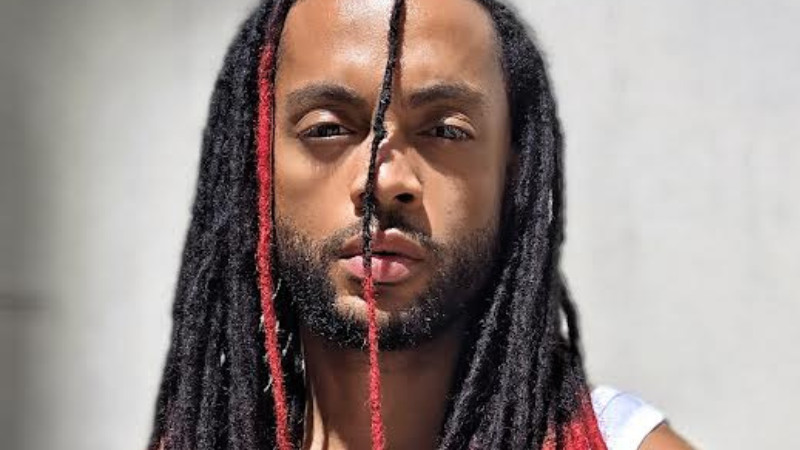
Paris-based artist, DJ, and producer Jaymie Silk announces his new EP More Love, Less War, unveiling its title track as the first single. Out via HE.SHE.THEY., it’s a bold, heartfelt release that channels the radical roots of club music through a global lens.
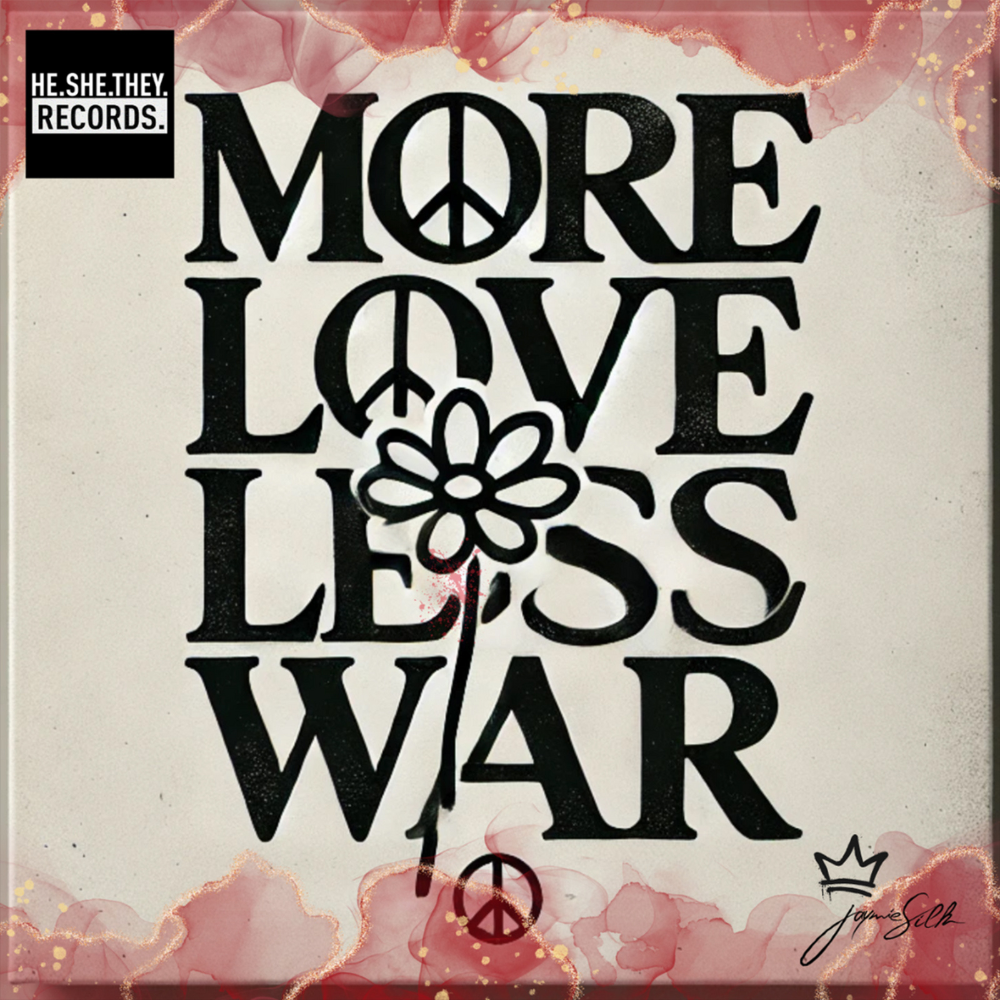
More Love, Less War follows a prolific run of projects from Silk, including his Missing Tracks album trilogy earlier this year and 2024’s “Ghetto Capitalism,” records that explored themes of identity, resistance and cultural heritage through club music. With previous releases on a host of influential imprints, from Pelican Fly and Fool’s Gold to Shall Not Fade, Nervous and !K7 Music, More Love, Less War, marks his return to HE.SHE.THEY. and continues to cement his position as one of the most uncompromising and essential voices on the global underground.
A powerful fusion of house, techno and political fire, More Love, Less War leads with its commanding title track – a bouncing, percussive cut built around a warped vocal that serves as a call to arms for unity and love, not just on the dancefloor but far beyond it. Raw and rhythmic, the track lands as a rallying cry. “More love, less war” isn’t just a hook, but a mantra: a reminder of the core values that birthed dance culture, now reclaimed and recharged for a new generation of ravers.
Silk doesn’t make straight-up-and-down house or techno. His music is shaped by his Afro-European heritage and driven by fearless experimentation; whether he’s incorporating African rhythms into house and techno arrangements, turning out fierce club edits of pop tracks, or serving sexually and politically charged heaters. The result is truly original music that’s as richly varied as his path, always unpredictable but never less than compelling.
At the centre of it all is a strong sense of purpose. Whether delivering lush piano house on The Legend of Jack Johnson, fierce political edits like Dance Music Is Black Music, or AI-assisted concept works like Rub Music, Silk’s catalogue is united by one non-negotiable: ethics. His club music isn’t escapist, it’s engaged, empowering, and rooted in lived experience.
As Silk puts it: “I’m so happy to be back on HST to spread the love with techno and house music.” On More Love, Less War, that message couldn’t be clearer – an EP made for movement, connection and collective healing on the dancefloor.
Tracklist:
- More Love, Less War
- Always In My Mind
- Always In My Mind (Club Edit)
For more information about Jaymie Silk, go to:
Instagram | SoundCloud | Spotify
More Love, Less War is out now on HE.SHE.THEY. Records.
Let’s Put The Groove Back in Techno and House Music
INTRO
Let’s go back to the beginning. What was the first moment you remember music having a real impact on you?
I’d say when I was a kid, I was surrounded by music. My father had a few vinyls. Soul music mainly. Tape, CDs, from west African music to French pop songs or my mother listening to the Pizzica, a typical Italian style of music from the south. I remember I had a tape with a few French songs, a lot of Bob Marley. I loved listening to it as a kid. The physical side of music, being able to touch it.
Growing up with an Afro-European heritage, how did that shape your musical taste and the stories you wanted to tell through your work?
As I grew up in a multicultural environment, surrounded by people from many different cultural backgrounds, I naturally tend to perceive things with a lot of nuance, especially when it comes to art. From my identity to what I’ve lived through, the people around me, and the way I navigate the social world, all of it has definitely shaped how I see things, how I absorb experiences, and how I tell stories. That’s why in my writings or interviews, you can read a lot about my analysis under a sociological lens.
If you listen to my music, whether it’s an EP, an album, or a single, it’s always tied to a particular moment in my life and to what’s happening in the world around me. That’s why my music is never the same through the years, even if you can hear this Jaymie Silk touch.
Were you initially more drawn to DJing or producing or did both evolve together for you?
I started with rap music as a teenager. It was first about writing, being able to tell things. Then, naturally, I started to produce as I needed beats. So first, I see myself as a music producer, a creative artist when it comes to music.
Was there a turning point when you realized music could move from being a passion into a full-time career?
Believing that music can become a full-time career is every artist’s dream, but sooner or later, you have to face the reality of the business.
It’s healthier to see art, and music in particular, as a personal quest. The reality of monetizing music, especially in the long run, comes second. It requires a deep understanding of economic dynamics, even more so in today’s age of techno-capitalism.
If by “full-time career” we mean making music all the time, then for truly creative people, it doesn’t matter whether you have another job on the side, creating is a need.
In that sense, as long as you’re creating, you’re already in a career. Monetization is a different conversation.
Being based in France, how does the Parisian or broader French electronic music scene influence your sound and vision?
I was introduced to electronic music when I was living in Canada. In that sense, North American culture influenced my music more. The French electronic scene, especially when you grew up in France during the 90s, is always designed by appropriation and whitewashing. For me, I couldn’t be part of this culture. Even in 2025, when you talk of France in electronic music, it is often (not to say always) under the lens of French touch. As I’m a product of a multicultural environment, I can’t give a simple answer to that.
Your music often explores themes of identity, resistance, and cultural heritage. Where does that strong sense of purpose come from?
I just need to look in the mirror to know why. It’s not just about music, it’s about life. Every day when I wake up, ever since I was a kid, all I have to do is watch the news or step outside to understand that I’m not what people expect me to be.
I grew up surrounded by discrimination. Racism has been around me since I’m a kid, I ve seen how my parents had to go through it their whole life. I know how marginalized communities have to live with this weight above their head on a daily basis. Music and art are powerful. They’re more than just aesthetics, they’re a way to channel your emotions, to tell your story about the world, to inspire others. That’s what they mean to me. When you have a voice, a way to express yourself publicly, in a world where the system tries to erase you on a daily basis, why waste the time you have? Why not use it to make people listen?
You’ve said, “Let’s put the groove back in techno and house music.” What inspired that mantra, and how does it manifest in your work?
It came more as an observation, especially after coming back to Europe in 2019, after 6 years in Canada, with this house and techno scene that’s been heavily whitewashed, so linear, so flat, that classic 4×4 beat with no depth.
I grew up surrounded by music from different environments, and even when I make club music, I want it to have groove. That’s the kind of music I was raised on, music that’s alive, that moves. Especially now, when it’s so easy to make what I call “audio content” instead of music, we shouldn’t forget that this is music made for dancing. And you can’t fake the groove.
You’ve been featured in major outlets like DJ Mag, Mixmag, BBC Radio, and France Inter. What impact have those platforms had on your journey?
On one hand, it’s more about recognition, especially in the beginning, it feels like being acknowledged, validated. Even more so when, like me, you grew up feeling illegitimate in a place like France, where non-white representation in electronic music was completely absent.
Being featured in those kinds of media isn’t an end in itself, but with time, it’s still something cool to experience, especially if it can help people to discover your music.
You’ve worked with labels like Pelican Fly, Fool’s Gold, Shall Not Fade, Nervous, and !K7. How do you approach the decision of which label fits a particular release?
Generally, people reach out to me to release a single, an EP, an album, or a remix. For a lot of labels, it’s usually them who decide what kind of sound fits their identity.
With Pelican Fly, I worked closely with them, especially with Richelle. It was a cool process that lasted for years and really helped me grow musically.
With Nervous, for example, I had just bought a new synth and was messing around one night. I got into the flow and made a track in 10 minutes using my Mackie mixer. I thought, “Yo, I need to send this to Nervous,” and they were like, “Let’s go.”
Some labels like !K7 or Shall Not Fade gave me total creative freedom. So yeah, there are no rules.
What is it about HE.SHE.THEY. Records that align so well with your message and artistic direction?
HE.SHE.THEY is about empowerment and freedom, and I love that.
Their vision is all about being yourself, no matter what. It’s about embracing the fact that people are different, and that’s exactly what makes the world exceptional. That’s completely aligned with my own vision. And above all, they’re genuinely good people.
Let’s talk about your new EP More Love, Less War. What inspired that title, and what message are you hoping to convey?
I made this EP and these tracks at the end of 2024. As I mentioned before, my music reflects what I see and the state of the world. This project was especially inspired by what’s been happening in the Middle East. And it’s heartbreaking to see that, months later, the situation has only gotten worse. If house music is supposed to be about love, about a message, then that’s exactly what I wanted to put into my music. And as I said, using a platform like HE.SHE.THEY felt like the right way to do it.
Why did you choose to structure the EP with just three tracks — “More Love, Less War,” “Always In My Mind,” and its “Club Edit?”
Originally, the plan was to release two tracks along with remixes by other artists. But my apartment got robbed in January earlier this year.
Luckily, the tracks had already been sent for mastering, but I no longer had the stems to get them remixed.So we had to stick with two tracks and a radio version of one of them, “Always In My Mind.”
What’s the emotional or narrative connection between “Always In My Mind” and the “Club Edit?”
It’s easy, one for the club and one for the streaming/radio. Something pretty normal if you remember the vinyl era.
The title track feels like a rallying cry. Was the vocal sample intended as a protest chant or something deeper?
I love incorporating political speech into my tracks, or vocal samples that sound like a sermon. That’s exactly what I wanted for this track.
You can groove on the dancefloor, and at the same time, I’m preaching the gospel.
“Empathy.
That’s the weapon we need.
To see the hurt in others
Is to see the hurt in ourselves.
When we love ourselves,
We stop wounding the world.
When we love each other,
We start healing the scars.”
What was different about the creative process behind More Love, Less War compared to past releases like “Ghetto Capitalism” or the Missing Tracks trilogy?
Missing Tracks is a compilation of songs that were on the laptop stolen at the beginning of the year.
Instead of crying over all that lost work, I decided to release the demos.
For “Ghetto Capitalism,” I was inspired by James Baldwin and approached the EP like writing a book, structured, intentional, with a strong narrative thread.
More Love, Less War is simply about love. Plain and powerful.
When you begin a new track, do you typically start with a beat, a melody, a vocal sample, or an overall feeling?
To be honest it depends. As I’m from the rap scene, I love to start with textures. It can be a sample, a vocal, some chords. Emotions first. I rarely start with just a beat, except if I want something hard for the dancefloor.
Your catalog spans a wide range including lush house, politically charged edits, and AI-assisted concept albums. How do you decide what direction to go with each project?
Just life. It’s like photography, you go outside, but you don’t know what you’re going to shoot.When I start making music, it always depends on how I feel at that moment. I never really know what’s going to come out.
The key isn’t just in making music, it’s in the selection. It’s about what you choose to keep, and what you decide to release.
That’s exactly what happened with the Missing Tracks EP trilogy, which was selected among the best EPs of the year by Mixmag. Those tracks weren’t originally meant to be released, but life had other plans.
You’ve released a prolific amount of music. How do you stay inspired and avoid creative burnout?
Creativity is a coping mechanism for me, so it’s never really been difficult.
Burnouts fed my burnout. But over time, I’ve learned how to create more peacefully.
That’s actually why I started doing photography recently. I don’t need to make tracks every day. I can rest, go outside, take some photos, and make music when I want to, not when I have to.
I think creativity is more of a pathology and you have to learn how to live with it in a healthy way, especially in a world that keeps demanding more and constantly feeds a daily sense of FOMO.
You’ve experimented with AI in concept works like Rub Music. What’s your perspective on technology’s role in the future of club music?
Technology has always been part of music history. It’s a broad question — like asking someone in the 60s what they think of the electric guitar or asking someone in 2010 how they feel about autotune. At the end of the day, it’s just a tool.
Now, if we’re talking about the democratization of technology and how it’s made it easier for everyone to create content; that’s a whole other conversation.
If you weren’t making music, what would you be doing instead?
Creativity is pathological, so if I weren’t making music, I’d be doing something else.
Painting, sculpture, acting… Something creative for sure.
What’s one piece of gear, hardware or software, you can’t live without?
My laptop. That’s the technology I started music with. My laptop, my daw and an internet connection and I’m good at making bangers.
What’s your favorite guilty pleasure track that always lifts your mood?
I don’t really have guilty pleasure. You should be happy with what you love.
Are there new collaborations, sounds, or messages you’re excited to explore moving forward?
I started to collaborate with BELZE, initially a rap producer from Paris. We’ve been making club music, 160 BPM. Don’t know if it will be release but it’s pretty cool.
And personally, I’m more into electronic music songs, slower. I listened a lot to the album “Play” by Moby the past months, old Four Tet, Toro Y Moi. I’m more in a chill mood, songs. We will see what happens
What’s the promo plan looking like for this new release? Any tour dates coming, or are you back in the studio cooking up the next mix?
You may have heard my mix for BBC Radio 1, I got my residency on Clubbing TV, other guest mixes coming too and some cool media coverage.
You are currently based in Paris. What is it like living there as an artist? Are there any local venues you enjoy for catching live shows? Do you also travel around Europe often to see or perform at other venues and festivals?
I don’t really go out, I’m probably the worst person to ask for recommendations.
If I do go to a show, it’s rarely electronic music.I have a strange relationship with music. I’m like a doctor, constantly dissecting it, analyzing every part. And sometimes, that makes it hard to just enjoy music.
On top of that, I couldn’t really go to clubs in France when I was younger, racism at the door is real here. So honestly, I just don’t bother anymore.
Thanks for doing this, man. I enjoyed our time together. In all of the interviews I do, I always give the artist the last word. Go.
If you can help one person, feel better, that person might help someone else, and then someone else. That’s how making the world a better place starts. And it also starts with yourself. More love, less war.
