

Full studio album DO YOU out November 28th on [PIAS] Électronique
Exploring mental health challenges and the rewards of the creative life
Get “Compass (how to stay aligned)” HERE / Official Visualiser HERE / Save album HERE
Berlin live artist/producer/multi-instrumentalist/vocalist Felix Raphael drops his forthcoming album’s second single, “Compass (how to stay aligned),” out now on [PIAS] Électronique, heralding the November 28th release of the full themed LP DO YOU.
The LP’s theme is mental health, exploring Raphael’s own mental health challenges as a successful international electronic music artist and his professional social work experience, aiming to help others both inside and outside the music industry by delving into these universally felt experiences. Split into four phases, DO YOU charts the peaks and nadirs of life as a touring musician, cycling through anxiety and struggle, mood swings, bliss, and finally equanimity.
Raphael achieves this through a blend of melodic and organic house with indie folk elements, purpose-designed for live performance as he plays guitar, piano, synth and saxophone and deploys his rich, warm vocal gifts.
While the LP will highlight issues such as comparison with others, dealing with both successes and failures, industry genre-conforming pressure and the courage needed to be open about mental health problems, it is also ultimately positive, in celebrating the true joy of creativity and sharing it with others.
Raphael’s warm, resonant vocal, piano and emotional synth chords build to a crescendo as more percussion, a slow portentous beat, high choral notes and swooping synths join in, like a breakdown in reverse, until the track comes full circle like a compass, as he moves from ‘standing in the middle’ of ‘many roads I could follow’ to end in a kind of peace.
“‘Compass (how to stay aligned)’ maps both the rush and the bliss of many roads visible to take,” Felix says. “It’s about the moments when the mind pulls in every direction at the same time: north and south but still constantly searching for the balanced center. A thousand ideas at once, my constant challenge to turn them into something that can translate to others. The record spins through opposing feelings and lands on a simple goal: to keep the needle steady enough to move forward.”
The main message of DO YOU the album is comparing ourselves less with others, embracing our weaknesses, and actively caring for our mental health — through therapy, open communication, and self-acceptance. There is currently a great need for such themes in art, and in the case of Felix Raphael, they are also deeply pleasurable to hear.
Tracklist:
- Where I Begin
- Doubts (when you’re all around)
- Medication (pull me out the rain)
- Therapy (leave me on my own)
- Compass (how to stay aligned)
- North
- South
- Centered
- Sincerity (a piece right of your soul)
- Creation (no matter how far I go)
- Exploration (step out your comfort zone)
- Resilience (just for a while)
- 911’s (to feel safe in place)
- Patience (every step feels right in time)
- Zuhause
- DO YOU
Felix Raphael “Compass (how to stay aligned)” is out now, get it HERE / Official Visualiser HERE. The full-length album DO YOU will be released on November 28th, with more singles to come in between, all on [PIAS] Électronique. Pre-save LP HERE.
For more information about Felix Raphael:
Instagram | Spotify | SoundCloud
I am writing songs
Last year on our way to Australia my wife and I postponed our trip to catch Tinlicker at The Novo in Los Angeles. I had been wanting to see them live for ages, and I made sure to be right up front when the show began. Their opening act was a guy named Felix Raphael, and from the very first note I was blown away. The way he owned the stage, his voice, and the energy he poured into the crowd left a lasting impression.
Fast forward a year and I discovered news of his upcoming album. When he released “Compass (how to stay aligned)” I was immediately hooked. At first I didn’t realize it was the same artist I had seen in Los Angeles, but when it clicked, I dove headfirst into his story, his catalog, and the path that led him here.
With the new album on the horizon, I reached out to connect. We hit it off right away and spent time talking about his journey, his music, and the themes behind his work. This conversation became one of the most heartfelt interviews I’ve done.
It’s a pleasure to share that with you now. I’m honored to introduce Felix Raphael.
A note from Felix: Hello 🙂 thank you so much for having me. First and foremost I need to state something because I feel it is very important. I’m just speaking my mind about my experiences here. I’m not an expert. I was neither “fully broken” before nor fully “healed” after finishing the album. It’s a cyclical process. I find it difficult to implement things that I have set out to do.
I still fail to keep track on certain things I dedicated to being good for me. Sometimes more sometimes less. But this album and especially the process of it definitely unlocked something here and there to reflect the past and the present a little better.
Your single “Creation (no matter how far I go)” was the first glimpse of your upcoming album DO YOU. Can you share the story behind this track and why you chose it as the lead single?
“Creation” is about returning to the quiet joy that made me start in the first place. Early on, creating meant possibility and staying up late; now it’s also a place to come home to when the road was long touring. The line “no matter how far I go” is a reminder that I can always return to that center. Sonically it carries the album’s DNA—organic textures and instruments, a warm bass foundation, groovy drums but also power and release on the drops—so it felt right as the first door into the record. The heavier topics are in the album, but “Creation” sets the tone that we’re moving toward light. The least “uncertain” topic of all in my opinion. And a hopeful and positive one, lyrically and musically. That was really important for me, that a potentially “heavy” album theme is perceived hopeful in the end and this is where I want to begin.
The album DO YOU explores themes of mental health, comparison, and vulnerability. As both an artist and a professional social worker, how did your personal and professional experiences shape the music and lyrics of this project?
I think in social work or actually in human interaction it’s always an interplay of leaving or creating space from distance, and getting closer to someone in certain situations. I tried to shape that into the writing of this album: the songs speak from up close instead of from some distance. Sometimes wide, sometimes narrow. I think in a more and more generic (music) world, it’s super important to get diverse again through every piece you write. If a song and a theme feels close, write it close, if it feels distant, capture it being distant. That doesn’t mean it can’t be super personal. I hit moments where being silent felt heavier than speaking—touring lows, loneliness, and the pressure to perform something different. Talks with friends from that time still keep me reflecting, although there are times that I have the feeling that I talk too little! The album names the hard things without turning them into spectacle, and it points to simple supports—people, habits, and a more grounded and less extrovert idea of success.
Across the 16 tracks, you weave together electronic and organic elements. How do you approach blending melodic house, indie folk, and live instrumentation into a cohesive sound?
I keep a limited palette and a shared space. The same handful of instruments—guitar, piano, voice, brass, strings—sit on top of patient electronic foundations. Field recordings and soft percussion glue the edges. I recycle textures across songs: resampling a guitar into a pad, or letting the strings return as a motif so chapters speak to each other. Every record has its own live texture recording, that we recorded at the same time as we shot the videos for the visual expression. So you can see the textures being recorded while hearing them in the song. I wanted to achieve more coherence between what we perceive and what we think. We often have the thought: “Ahh, that sounds like…” don’t we. With the videos and visual expression, I want to give the audience another dimension to have this “Ahhhh” effect. In “Creation” for example you can hear sand recorded right at the beginning of the song. If you watch the music video you’ll see how that was done. Technically moreover, I stay within a small tempo pocket, reuse the same reverbs and rooms, and prefer performance over perfection. That consistency lets different genres feel like they belong to one, body kind of.
You taught yourself to play the flugelhorn specifically for this album. What inspired you to add this instrument, and how does it contribute to the hopeful feeling you’re aiming for?
I wanted one sound-that could travel through the whole record and tie the chapters together. Brass instrumentation felt very good, enhancing that indie folk vibe that I love so much that gives this warm hopeful feeling. One, pretty uncommon but perfectly balanced instrument in the brass section is the flugelhorn—warm, mid‑focused, and balanced. It isn’t common in my scene, which made it personal. Arranging it with strings and other brass gave the songs an orchestral breath without turning bombastic. Learning it was humbling—the embouchure is a journey—but the slight imperfections support the message: less polish, more life. It became a symbol of balance for me: fewer sharp highs and lows, more centre. The recordings of it def took quite some time to be right. And I def need a lot of practice till I’ll bring it on stage live. But, that’s def the plan.
The message of DO YOU is ultimately positive, celebrating creativity and connection. What do you hope listeners take away from this record when they hear it start to finish?
The album is not ultimately positive in every part. Phase 1 needs to feel heavy in a way. Because it needs to be, to feel authentic for the topic. For me. But in the end the message is supposed to be positive and hopeful, it’s on us to change things. Regarding the listeners of DO YOU, I hope they feel seen, heard and a little steadier. The album acknowledges doubt and coping but keeps moving forward towards healthy reflection. I want people to protect their taste and their mental hygiene, to care for themselves in small daily ways. Talking about negatives openly. Normalize that and maybe we use that thing called social media trends to push a trend of sharing vulnerability.
The tracklist includes songs with titles like “Medication,” “Therapy,” and “Resilience.” Did you write these pieces as reflections of your own journey, or are they more universal stories meant to resonate with anyone listening?
To be fair, I started writing because I thought of the topic as very important for the music industry so it started semi-general, but over time every song started to get more and more personal, to very specific thoughts or experiences I faced. It felt more and more authentic in a way. And that, I feel, was bending it outward to society again. Making it accessible to not only figures in the music industry. The songs begin close to me and open outward. Some songs reflect personal chapters; others are archetypes that many people recognize. Either way, authenticity is the most important to make it touchable. The goal isn’t diagnosis—it’s recognition. If a listener hears their own life inside the song, that’s the measure.
Your single and album artwork are striking. Can you tell us about the creative process behind the visuals and how they tie into the themes of the music?
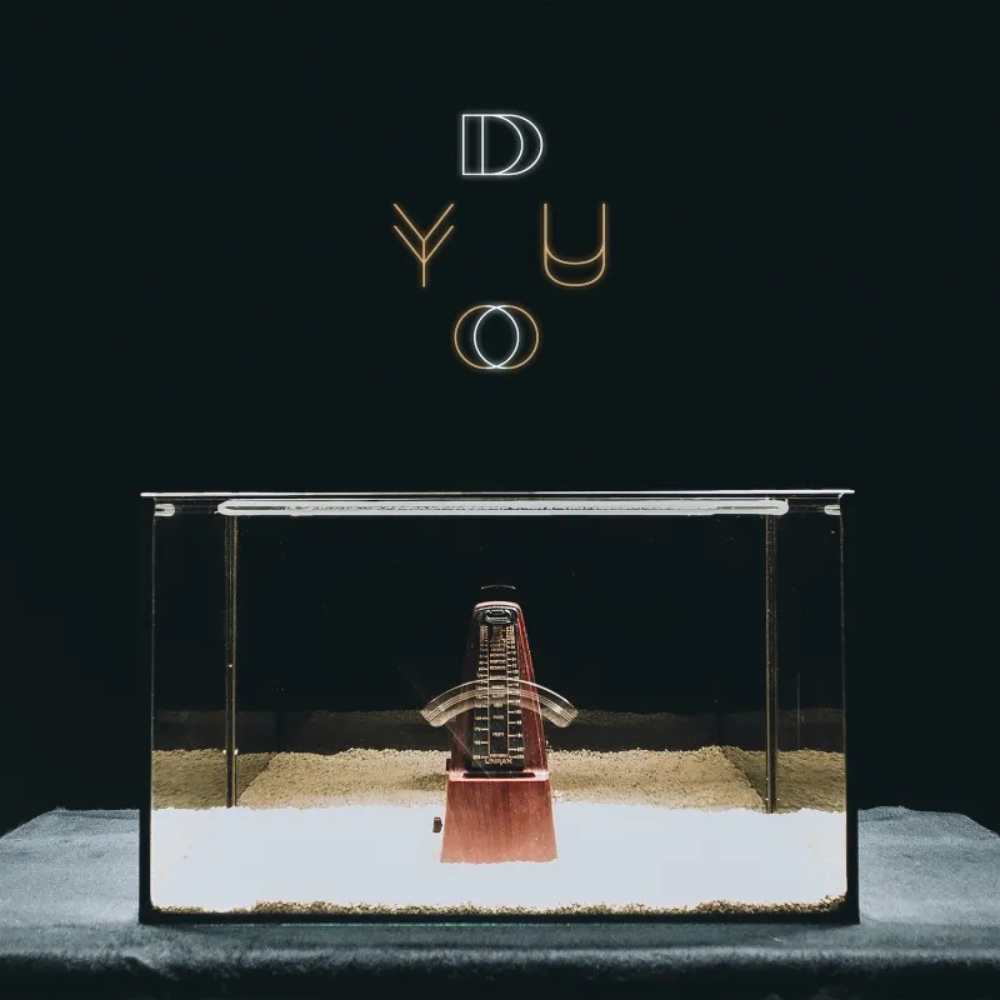
We wanted visuality that makes its audience have this “aha” moment. A kind of multidimensional approach on hearing and seeing. Something that happens in the audio and is also visualized in the video footage, that fits my music and its aesthetic and also feels grounded and organic—textures from nature, textures from life. The circle appears as a quiet symbol for cycles: doubt returns, but so does balance. These textures such as the sand in “Creation,” the chain in “Therapy,” pills in “Medication,” or the spinning top in “Patience” always relate to the song and its theme. We can resonate with their vibe and meaning when we see them but also know how they sound. One of the main album themes is the interplay of dark and bright, so outfit-wise that’s the overall concept, to have two simple and clean outfits, one dark, one bright, that relate to the different songs and their tone. All of that will have a third big part. LIVE implementation. To bring it to life and to interaction with an audience. There was no AI involved in the whole creative process of the album. Everything is thought, produced and shot by humans and that couldn’t make me more proud.
Your songwriting seems deeply personal yet universally relatable. Can you walk us through your writing process? Do songs start with lyrics, melodies, or even an emotional theme?
Usually it’s some kind of traction that comes simply—a sentence in my notes app, a voice memo hummed out of pitch 🙂, or a very basic drone. Sometimes I sketch a loop live and sing nonsense syllables until a phrase lands. Sometimes I have a pretty well started lyrical approach already before I even start with the music. Sometimes other way round. It’s hard to say in general.
But with this project, this record, my openness to my own taste and ground def got different. Not caring much about other stuff, that was holding me back quite often to go really deep down the rabbit hole of my taste in a way. Another very important topic. Comparison.
The other thing that changed in that project is the visual approach, so I was always trying to think in images as well while writing. Like, how can this part be visualized in a music video or on stage. That flipped it kind of as well.
I noticed you send out updates through your newsletter. How often do you share news with your fans there, and what kind of behind-the-scenes stories do you like to include?
I write when there’s something to share, not just because… Roughly monthly around releases. I like to include small studio notes, sketches, routing diagrams, practice clips, and reflections on routines that I started and maybe also the ones I quit. It’s less a promo blast, more a letter from my workshop to let you be part of it.
You’re based in Berlin, a city with such a rich music culture. We have dear friends there and love visiting. How has living in Berlin influenced your sound and artistic journey?
Berlin gives you two gifts: room to experiment and room to be quiet (if you live in a quiet part like me ofc.). The clubs teach patience and long arcs. Being able to be anonymous helps me take creative risks. The community is generous but also you need to find them actively. Berlin is very fast-living as well and as a lot of people come to Berlin for the “100% freedom” perception of the city, it can be difficult to find long lasting relationships that not only live in the moment. Still, Berlin is my home of choice! And that has reasons. It’s beautiful here — come and visit ❤️
You’ve mentioned the importance of mental health in music. Do you feel the industry is becoming more open to these conversations, and how do you see your role in helping normalize them?
It’s getting better, slowly. Some talk still feels like PR, so I keep it simple in my own work and hope it’ll resonate: clear schedules, days off after heavy runs, check‑ins with the team, and pointing people to real support when it’s needed. I’m not a spokesperson—just trying to change my habits to more healthy and joyful processes and share notes when I feel they’re useful. Most progress is quiet: friend to friend, crew to artist. Small, steady habits beat big statements I think.
With the album release in November, do you have plans for a tour this fall? What can fans expect from your live shows?
Yes—we’re building a run around the release. I’m working on following the album’s arc: it starts close and grows open. I perform with guitar, piano, voice, drum pad, and the flugelhorn taking more space than on the record. The lighting shall be subtle, intimate and minimalistic in some, energetic in other parts. To picture the albums diversity—human, supporting the chapters rather than overpowering them. Expect dynamics, presence, and real interaction with the room, the audience, you, as that is something I am learning the most. Being confident with interaction that is not “music-related” in its core.
For someone who has never experienced a Felix Raphael performance before, how would you describe the atmosphere and energy of your live sets?
I think that question should be answered by someone who attended one of my appearances. Let me try to describe how I wish it would be perceived. I imagine a room you can breathe in. It combines sitting calmly and dancing freely. Early on it might feel more close and steady; later it lifts the energy without shouting. Trying to leave space for real connection and interaction, small risks, eye contact. It’s less spectacle, more shared presence.
As a multi-instrumentalist, vocalist, and producer, you wear many hats on stage. Do you find performing live more rewarding when you’re playing several instruments, or is it the audience connection that drives the magic?
I just can’t decide which one I want to go for 😃 No, different songs have different instruments in them so I bring them on stage and play them. It’s as easy as that. Also
I always wanted to give the audience a real “band-like” feeling, especially in the electronic environment when I started to go on stage. I think that instruments are there to build a more “natural” kinda connection to the audience as they can relate to them as they know them. Almost everyone knows what an electric guitar or a piano sounds like. So it also makes it more relatable to a wider audience. Switching between them keeps me present and changes energy when it’s needed. Still that’s a really good question because I tend to do “too much” sometimes, being curious plays a big part, less is more, this is what I am continuously working on.
Finally, the album is called DO YOU. What does that phrase mean to you personally, and why was it the right title for this project?
It’s both a question and an encouragement. Am I truly looking after my mental health? Am I making choices that feel true to me? The title is a small permission slip to protection, reflection, boundaries, and joy. It fit this project because the record is about moving from struggle toward balance without pretending the cycle disappears.
Thank you so much for doing this. I enjoyed our time together. In all of the interviews I do, I always give the artist the last word. Go.
If you’re in a heavy place or moment, you’re not alone. Ask for help, or just text a friend, take one small step, instead of wanting to change everything at once. Protect your taste. Protect your joy. No matter how far you go, you’ll come home to what or who you love. DO YOU.
