
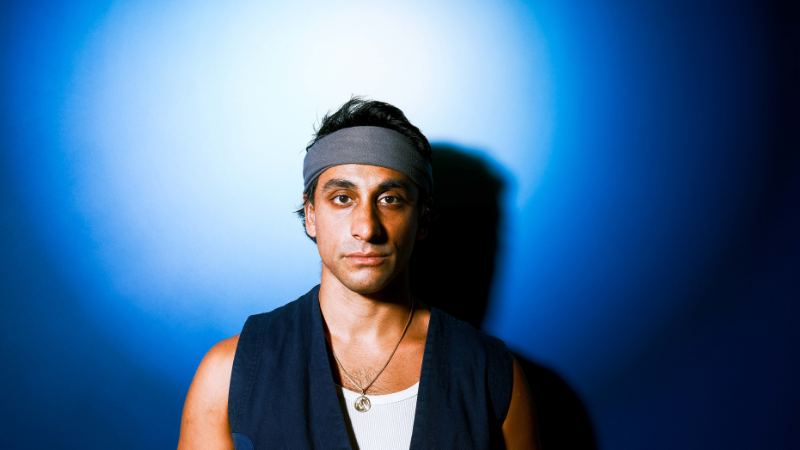

Musician and meditation practitioner Aasheesh Paliwal, known as ShiShi, has released his 9-track album Indigo, a transformative rock record that emerges from two decades of creative evolution. The New York-based artist channels his signature fusion of Indian classical influences and meditative sound design into an unexpected rock framework, creating arrangements where guitars sit alongside tablas and distorted riffs meet hypnotic mantras.
Indigo traces a profound emotional journey from disconnection to expansive awareness, rooted in Hindu philosophy and symbolized by the indigo color of enlightenment. The album spans from the harmonium-led sunrise meditation of “AHAM BRAHMASMI” to the digital addiction commentary of “Dopamine Machine,” each track carrying intentional arrangements designed for both cathartic release and spiritual awakening.
About his artistic journey to Indigo, ShiShi says, “Rock has always been in my blood. I grew up listening to Led Zeppelin, The Rolling Stones, Guns N’ Roses… but as a shy, introverted kid who moved countries every few years, I found my voice in solitude. Making beats on my laptop felt safe. Twenty years later, it feels like I’ve come full circle. With Indigo, I wanted to take the intensity and rawness of rock and fuse it with everything I’ve learned from meditation, shadow work and sound healing. People think of spiritual music and picture sound bowls or ambient drones (and that’s awesome too), but I love the idea of Trojan-horsing these messages about awakening into a genre that hits you in the chest. It’s loud, it’s urgent, but at its core, it’s about stillness.”
The album’s emotional terrain encompasses the devotional surrender of “Dreamweaver,” the fierce feminine force of “KALI,” the blistering outsider’s anthem “Loser,” and the closing reassurance of “Krishna’s Theme” – a reminder that even in fear, the divine quietly holds you. Every track on Indigo is tuned to 432 Hz, a frequency many connect with focus, healing and balance. Previously released singles “The Light That Wakes Me” and “Grandfather” established the album’s themes of shadow work and self-discovery.
ShiShi’s career has consistently merged worlds since his 2017 breakout “Aarti” reimagined Bollywood through electronic production. Born to Indian parents and raised across China, Switzerland, and the U.S., he’s drawn from devotional bhajans, classic rock, and global pop throughout his evolution. His 2021 release Homecoming explored sound healing through ambient arrangements, while 2022’s Chrysalis paired hypnotic beats with transformation themes.
In 2024, he co-founded the spiritual dance project BAHÉ with Aditya Rao, refining his integration of music and mindfulness. Beyond recording, ShiShi has established himself as a meditation and sound-healing practitioner, leading workshops and creating immersive experiences that bridge music with personal awakening.
Indigo demonstrates how rock can serve spiritual exploration while maintaining the intensity and urgency that defines the genre. The fusion creates something unexpected yet deeply intentional: a bridge between the cathartic power of rock and the transformative potential of meditative practice.
About identity and creativity, ShiShi says, “I never really had the luxury of one clear identity. My whole life has been about not fitting neatly into one box: culturally, musically or personally. I grew up across China, Switzerland and the U.S. with deep roots in India. That used to make me feel like I didn’t belong anywhere. Now I see it as my superpower. My work has always been about building bridges: between East and West, between the head and the heart, between the self you show the world and the self you find when you close your eyes. Indigo is the culmination of that journey. It’s not just an album for me… It’s a map, a reminder that you can turn all the places where you’ve felt lost into coordinates that lead you home.”
Following the album’s release, ShiShi performed a special Indigo live concert in Brooklyn at National Sawdust on September 6, 2025. The show featured full-band arrangements and fluid production. A live album will follow Indigo, along with more tour dates and wellness-driven performances designed to give audiences not just a show, but an experience of transformation.
For more information about ShiShi:
Instagram | TikTok | Spotify | YouTube
Modern Devotional Music
A few years ago, I graduated from Mindful “U,” a 28-week program created by Craig Marshall, The Monk, and Rick Ladendorf, The Mastermind. This program was a deep exploration of mindfulness, meditation, and inner peace. The courses help professionals become better leaders, better communicators, and happier individuals.
So when ShiShi crossed my desk, I was immediately hooked. I did some digging and discovered that he was more than a musician; he was also a meditation practitioner. In the Mindful “U” program, we began every session with a mini meditation. After completing the program, I dedicated another two years to writing a thesis on meditation. Those short sessions influenced me enough to dive deeper into the subject.
The more I learned about ShiShi, the more I knew he would appreciate my journey. After listening to Indigo over and over again, I reached out to him for an interview. We met, had a meaningful conversation, and connected on a deeper level. I encourage you to listen to the album before reading this to better understand the man behind the music. This interview was special, and I am truly honored to introduce ShiShi.
Congratulations on the release of Indigo. How are you feeling now that this album is finally out in the world?
Thank you so much, Ricky! I’ve been working on this album for three years, so it’s incredible to finally have it out in the world. Seeing an idea go from a seed, incubate over time through all its twists and turns, and finally become something tangible is very gratifying.
You describe Indigo as a culmination of twenty years of creative evolution. Can you take us back to those early days and what first drew you to making music?
I grew up playing classical violin because my mom encouraged it as an extracurricular, and I had a natural knack for music. But after a while, I got bored since I was just playing other people’s music. When I picked up a guitar at around twelve, I realized I could make my own songs and set my own rules, which was liberating. That’s when I got into classic rock, and it was really the start of me making music.
Rock has always been in your blood. What was it about Led Zeppelin, The Rolling Stones, and Guns N’ Roses that left such a lasting impact on you as a young listener?
It was really the raw energy and rebellion that drew me in. Classical music is beautiful but has so many rules, while these bands played by their own rules and still showcased amazing skill. That rebelliousness resonated with me as a teenager, which is naturally a rebellious time. Everything aligned perfectly.
At the same time, you were exploring solitude and finding your voice through making beats on your laptop. How did those two seemingly different paths come together in your artistry?
Those paths weren’t simultaneous. Making music on my laptop came much later, during high school and college, and was partly due to my social anxiety. It pushed me toward electronic and hip hop music, which was very different. It wasn’t until much later that I started combining those worlds.
You’ve said Indigo is about taking the intensity and rawness of rock and fusing it with meditation, shadow work, and sound healing. What did that fusion process look like for you in the studio?
The fusion process was very natural. To me, intensity and rawness represent Shakti energy—raw, feminine, wild power—while meditation and sound healing embody stillness or Shiva energy. In Hindu philosophy, there’s a duality between these elements, and for me, both are ways of connecting to divinity. It’s not about what you do, but the intention behind it.
Each track on the record feels intentional, from the sunrise meditation of “AHAM BRAHMASMI” to the cultural critique of “Dopamine Machine.” How do you approach balancing catharsis with spiritual awakening in your songwriting?
Making music is my way of expressing and healing. I think many problems in the world stem from unexpressed emotions that eventually surface in toxic ways. Music allows me to channel and transform those emotions, making the process deeply cathartic and healing.
Every track on Indigo is tuned to 432 Hz, a frequency connected with healing and balance. Why was that choice important to you, and how do you think listeners experience it?
432 Hz is often called the frequency of the heart and is known for creating coherence between heart and brain. There’s research suggesting it’s a healing frequency. Including it was a subtle way to add healing not just through lyrics and melodies but within the vibrations of the music itself.
The album features songs like “KALI,” “Loser,” and “Krishna’s Theme” that each explore very different emotional landscapes. Which track was the hardest for you to complete, and why?
“Krishna’s Theme” took the longest and was probably the most ambitious. I wanted to do justice to the idea of combining sacred Indian kirtan chanting with modern pop, so it took a lot of time. I started it in 2022 and finished it by the summer of 2025, making it the last song completed.
You’ve spoken about Trojan-horsing messages of awakening into a genre that hits you in the chest. How have audiences responded so far to this mix of heavy rock and spiritual intention?
People have responded really well. Rock inherently contains a subtle thread of spirituality, whether or not it’s acknowledged. I feel like I’m just making that undercurrent more explicit and naming it out loud.
Your background is uniquely global, having grown up across China, Switzerland, the U.S., and with deep roots in India. How do those cultural intersections shape the way you make music today?
Growing up across different cultures means I never feel tied to any one culture or genre. Moving constantly meant I never belonged to just one world, which has allowed me to be adaptable and chameleon-like in my music and art.
Of the nine songs on the album, “When It’s My Time” might be the most powerful track. The sound, the lyrics, the emotion all hit so deeply. Can you share what those lyrics mean to you personally, and what kind of reactions you have had from fans? For me, it brings me to tears every time. It is that good. You should be proud of this one.
Thank you, that’s very kind. For me, “When It’s My Time” is about making peace with impermanence and death. I wrote it after a psychedelic experience that brought me face-to-face with my own mortality. There was a lot of fear, but also bliss on the other side. It echoed what spiritual traditions say, that consciousness persists and is immortal. The song is written from the perspective of that enlightened view on death; it’s not the end, just a transition.
You’ve said you never fit neatly into one box and now see that as a superpower. How has embracing that perspective shifted the way you view both your identity and your creativity?
Embracing that idea allows me to avoid being tied down to one creative identity. Creativity is about listening to the ever-changing moment and responding to what the time needs. The moment you box yourself in, you start to grow stale, so staying open is vital for my creativity.
Indigo feels like a journey from disconnection to expansive awareness. Do you see this album as autobiographical, or more as a map for listeners to follow on their own paths?
I see it as both. The album is definitely autobiographical, but once music is out in the world, it becomes something listeners can interpret for themselves. That’s the beauty of it.
Alongside your music career, you’re a meditation and sound-healing practitioner. How do those practices feed into your songwriting and performance?
My spiritual practices are the foundation of all my creativity. Connecting to a deeper consciousness is the well from which I draw every lyric, note, chord and rhythm. It is absolutely vital to the creative and performance process.
With BAHÉ, your spiritual dance project, you’ve already begun bridging mindfulness and music in new ways. How has that collaboration influenced what you created with Indigo?
That project was my first step into spiritual music. It was necessary and influential, marking my early forays into singing my own songs and songwriting.
You mentioned that a live album will follow and more wellness-driven performances are coming. How do you envision the live side of Indigo evolving as the tour unfolds?
We have a live album coming, and I envision us creating a new kind of event, an intentional concert that combines meditation with rock music, aiming to bring spirituality into more mainstream venues and audiences.
Looking ahead, what do you hope people carry with them after hearing Indigo and experiencing it live?
If the album can spark even a seed of curiosity about their own divinity and prompt people to consider their spiritual journeys, that would be incredible.
We’ve covered so much today, and I am forever grateful for your time. I enjoyed our conversation. Before we wrap up, is there anything I haven’t asked that you’d like to share?
I want to remind everyone that my work as an artist centers on the message that we’re all one being. There are practices that can help realize this unity, developed by wise people throughout history. If we all move toward this understanding, so much division in the world can heal. When you truly feel others as extensions of yourself, it becomes impossible to harm them.
Thanks again for your time. In all of the interviews I do, I always give the artist the last word. Go.
I just hope for peace. Thank you for this wonderful interview, Ricky. Appreciate it.
