
Artist: Various Artists
Title: Pleasure Pack Vol.1
Label: ANTHR FCKNG PARTY
Release date: January 9, 2026
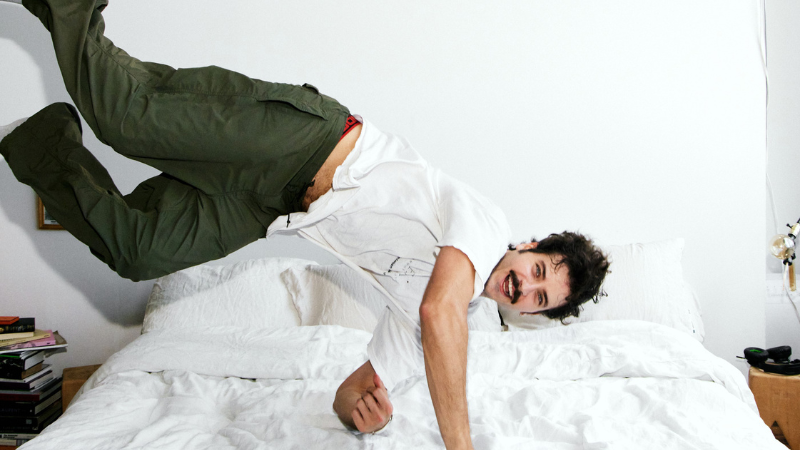
NYC violinist, producer and promoter Kozlow unveils today via his recently minted ANTHR FCKNG PARTY (AFP) label Pleasure Pack Vol.1, the inaugural various-artists compilation, arriving January 9.
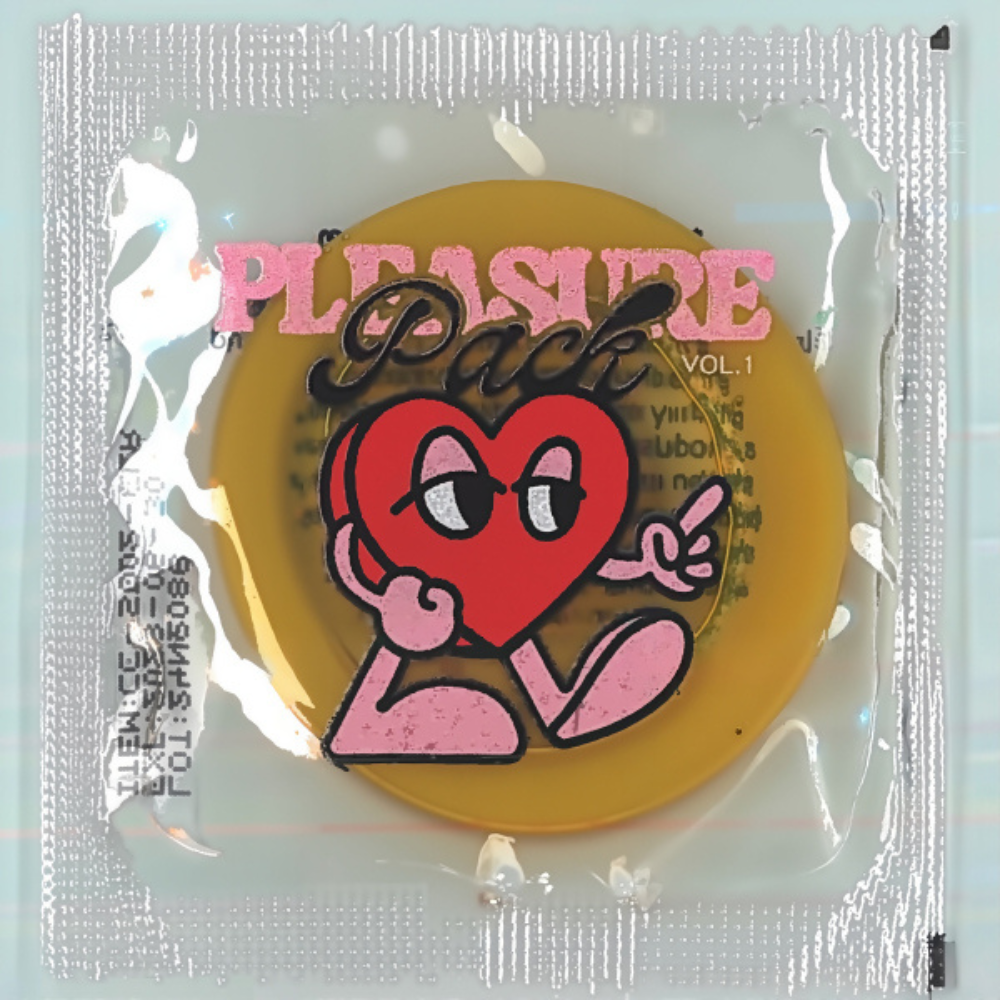
The bundle collects exclusive tracks from artists at the centre of the AFP ecosystem – Mona Matsuoka, Rachel Winters, Jasa, Tolga, CHASKE, Kristos – and features a fresh new cut from Kozlow himself, titled “Bark.” More than just a label release, Pleasure Pack Vol.1 is a document of a living scene – music that has already been pressure-tested on AFP dance floors in the past and artists who performed at ANTHR FCKNG PARTY events reflect the taste, trust and momentum of this city-bound community that Kozlow created. Now, he steps further into his role as curator and tastemaker using the compilation format to amplify the artists who power AFP’s events across North America. The release also marks the next strategic stage for the label seeing from now on AFP rolling out compilation volumes on a quarterly basis as an ongoing platform to highlight and lift the people who reflect the brand’s sound. To celebrate the new release and his new track “Bark,” Kozlow will host a launch party at Outer Heaven in New York City on January 10.
I started the ‘Pleasure Pack’ VA series to show what we’ve actually been building in real life, not just online. It’s about the crew. All the artists featured are working DJs who are in the rooms, playing our parties, moving dancefloors, and DJing all over the city on any given night. This is the music we’re playing and listening to right now in NYC. It’s about shared taste, trust, and tracks that have already been pressure-tested at our parties. The ‘Pleasure Pack’ name and the condom artwork reflect how we think about releases. They should be functional, meant to be used, and ideally not disappointing. The series will keep popping up throughout the year as a way to spotlight the artists who feel central to where AFP is headed. – Kozlow
Tracklist:
- I <3 You – Chaske
- Work My Body – Jasa
- What You Sayin – Rachel Winters
- Bark – Kozlow
- TAKA (KRISTOS Remix) – Mona Matsuoka, Kristos
- Burn Me – Tolga
Pleasure Pack Vol.1 is out now on ANTHR FCKNG PARTY.
About Kozlow
Classically trained violinist turned underground instigator, Kozlow has performed alongside Carl Cox, Green Velvet, Cedric Gervais, and Alesso, and DJed as direct support for Carlita, DJ Tennis, LP Giobbi, Diplo, John Summit, and SG Lewis. His production work includes collaborations with Scott Storch, FunkFlex, King Von, and Burna Boy. He currently holds monthly NYC residencies at Outer Heaven and Gospel, where his sets often weave live violin with left-field house selections.
About ANTHR FCKNG PARTY
What started as a DIY NYC party with a no-lineup, no-phones policy has grown into a cultural movement – drawing over 10,000 people in 2025 and now expanding into a label. AFP remains rooted in community, chaos, and raw energy: the same values Kozlow brings to his productions.
For more information about Kozlow/ANTHR FCKNG PARTY:
Kozlow: Website | Instagram | Spotify
ANTHR FCKNG PARTY: Website | Instagram
When Pleasure Pack Vol.1 landed in my inbox, I pressed play out of curiosity. A few tracks in, I was hooked. What began as a casual listen turned into a deep dive into Kozlow’s evolution from classically trained violinist to underground instigator, the ethos behind ANTHR FCKNG PARTY, and a compilation that feels less like a label sampler and more like a snapshot of a living scene.
I wanted to understand what drives him. What sparked this release? How does he balance performing, producing, promoting, and now curating? And where does ANTHR FCKNG PARTY go next as it evolves from a no-phones, no-lineup NYC movement into a quarterly compilation platform?
It was a pleasure sitting down with Kozlow to talk about the vision behind Pleasure Pack, the growth of AFP, and what is shaping his future.
Turn it on, find your favorite cut, and get to know Kozlow.
Your sound has always felt very intentional, blending classical discipline with forward-thinking electronic music. How would you describe your sound today, and how has it evolved over the years as both a violinist and a producer?
Hey! Thanks for having me—really appreciate it. Hope all is well.
Honestly, it’s a balance between unlearning a lot of the stuff I absorbed in my classical training and giving myself permission to make mistakes again. When I started learning jazz violin, it felt similar—I’d spent 20 years learning how to recite Shakespeare, and once I actually understood the language, I finally had permission to use my own words.
Production is like that for me. Sometimes the obvious thing isn’t the right thing. The dissonant, ugly bassline or weird MIDI pattern or non-linear loop might actually end up being the coolest part of the song.
Early on, I was very intentional about not wanting to sound like other people—but I also didn’t really know the rules yet. And you kind of need to understand the rules before you can break them. I probably could’ve saved myself a lot of time by listening to advice and doing remixes or more structured production early on, but at the same time, getting good at anything is about repetition—learning over and over what works and what doesn’t.
As a violinist now, it’s pretty much anything goes. I don’t stress about performances at all. I just show up, put the instrument in my hand, and experiment. I try to impress myself when I play, and risk-taking is part of that. I think audiences can feel when you’re actually having fun versus just doing the job.
You recently released ANTHR FCKNG PARTY – Pleasure Pack Vol.1, the first VA compilation on your AFP label. What inspired this release, and why did now feel like the right moment to launch a compilation rather than another solo project?
Yes—the Pleasure Pack! This was really the culmination of a long journey of ideas finally coming together. It’s such a cool feeling to take something from concept to execution and then watch it take on a life of its own.
I’d always thought it would be funny and sick to release an EP as a “pleasure pack,” like a condom wrapper. When we started AFP and began talking about branding for a VA, that idea resurfaced. And since we’re independent and can do whatever we want, it was like—wait, there’s literally nothing stopping us from doing this.
I’m really inspired by proper vinyl labels. In this world of immediacy, there’s something special about actually manufacturing physical objects and scanning them for album art. So the idea became: what if we did the same thing, but with condoms? Then it turned into, okay—what should the condom look like, how do we manufacture it, how do we scan it, etc.
Now, somehow, we’ve actually manufactured, scanned, and released real condoms as album art. It makes me incredibly happy. It wasn’t cheap or easy, but that’s what makes it special.
Pleasure Pack Vol.2 coming soon!!
The compilation features Jasa, CHASKE, Tolga, and more. How did you select the artists for this release, and what qualities were you looking for when curating the project?
The idea was to use the VA as a platform to showcase artists we genuinely love and who are actively part of the scene. Everyone on this release is a close friend of mine based in NYC and deeply involved in what’s happening here.
Going forward, I definitely want to open it up to other cities. One of the beautiful things about working in this space is constantly meeting incredible people who are passionate, motivated, and inspiring. Now that AFP has real infrastructure, being able to help bring other artists’ music into the world is the coolest part and the wheels are already in motion to make that happen!
In terms of qualities—it really comes down to the music and the artist. Does it work on our dancefloors? Will it translate globally? And do we believe in the artist? I really only want to work with artists that are as serious about this as we are.
Why did you decide to keep the release to six tracks? How do you determine the final tracklist and order?
I like smaller VAs because they give listeners time to really sit with each track. There are so many demos floating around—it’s important to be selective.
These were singles from artists I believe in and want to see succeed. For the track order, I just imagined myself DJing them in sequence. If it made sense in a set, it made sense on the record.
When do you know a song or project is finished?
That’s a tough one. It really depends on the song. Lately, I’ve adopted the mindset that music sitting on my laptop is good for nothing—and now that I have a label, I might as well release things as they come. I’m really grateful that I don’t need to wait for permission—if I feel like I finished a 6 minute instrumental and I want to release it—I am going to release it.
I also need deadlines. Setting real ones has been huge for me. Sometimes a song flows and comes together in days; other times you could tweak forever. At some point you have to ask: did I capture the idea? Did I present it clearly and efficiently? Did it hold attention?
An EP is the same question, just on a macro scale. Does it make sense as a whole? Does it convey something coherent?
Do you remember the first time you played the violin?
Yeah—my parents’ bedroom. My mom had just gotten me a half-size violin (I was always tall), and I remember trying to play it without rosin on the bow (which produces no sound). After my first group lesson, I learned how to rosin properly and started making actual sounds.
No idea where that violin is now—it was probably donated or traded in as I grew. In hindsight, we should’ve saved it for my little brother, who’s an incredible player but wants to be a rocket scientist. To each their own.
You attended Vanderbilt. How did that experience shape you?
I was accepted into the music school, but I really didn’t want to be a classical musician. I got there and realized there was a whole world beyond practicing violin six hours a day—plus a lot of partying.
I switched out of the music school after a semester and got a business degree. That’s when I started teaching myself production, guitar, and other instruments. In hindsight, maybe I should’ve stayed and tailored the program differently—but here we are.
You’ve joined Carl Cox at Burning Man. How did that happen?
Chaos and friendship. I’d never met Carl, never heard of the Purple Party, and was very much not sober. I was ready to sleep after an all nighter and my friends insisted we go.
They asked me if I’d play violin with Carl if they could make it happen. I assumed nothing would come of it—but they actually left the party, found my violin, got Carl’s attention, and next thing I knew I was on my friend’s shoulders playing with Carl Cox.
The next year, I showed up early, met him properly, and he was incredibly kind and supportive. Since then it’s somehow kept happening. It’s random, fun, and makes my friends happy—so why not keep it going?
Tell me more about ANTHR FCKNG PARTY as a concept.
It’s evolved a lot. It started as an experiment—could we throw a party in Manhattan? Turns out we could!
Now, with the label active, I’m throwing fewer parties but focusing on making them exceptional. For me, a great party is about freedom, expression, connection, and presence. That’s why we push the no-phones policy—it creates the best dance floors.
AFP is special because the music and the parties feed each other. If you leave wishing you had video, that’s fine—but our hope is that you’ll have the music forever as a keepsake of the moment.
What does support from artists like Diplo and John Summit mean to you?
It’s surreal. But it’s also the result of years of working in isolation, failing repeatedly, and showing up anyway.
Validation helps, sure—but my classical background taught me how to fail publicly and keep going. At a certain point, you realize something is working, but internally nothing really changes. You just keep doing your best. If people like it, amazing. If not, also fine—I’m still making music and living my life.
Are you coming to Stagecoach this year?
I think so! I love that festival. It’s not about clout—it’s just people who love music. If I’m there, let’s definitely link. Yeehaw.
You’ve worked closely with LP Giobbi. What stands out about her?
She took a chance on me when she didn’t have to. I sent her demos and suddenly woke up to a video of her playing my music at a dream venue—total pinch-me moment.
She works incredibly hard, and she’s nailed the instrumentalist-DJ fusion. I’m also extremely jealous that her instrument sometimes only requires one hand (she can use mixer FX while playing – whereas I need the bow). I hate carrying gear, and lugging a violin through TSA will never be fun.
Why does Outer Heaven feel like the right home for AFP?
It’s one of the last true experimental club spaces in Manhattan. Great sound, intimate, beautifully designed, incredible staff—and the DJ booth feels like a spaceship.
Smaller rooms create community instead of spectacle. As long as they’ll have me, I’d love to keep working with them.
How do you balance discipline and freedom creatively?
It’s about giving your ideas the best chance to succeed. For me, that means leaving my violin on my desk, keeping my mic set up, and minimizing friction between idea and execution. The longer it takes, the more energy you lose and the less likely I can capture it.
What does a focused studio day look like?
Early mornings are great for sketching ideas. I try to leave the house daily—touch grass, reset—and then decide which of the many ideas in progress deserves attention.
From there, it’s about improving the core idea, finding the path of least resistance, and pulling inspiration from other music without copying it.
How much of your music’s emotional impact comes from classical training versus the dance floor?
DJing has massively shaped my production. I can now visualize how something will feel in a room before I play it.
My bad habit is overstuffing tracks. I’m constantly relearning that simple, ugly sounds often work best. Context and restraint matter.
Looking ahead, what excites you most?
I’m incredibly focused right now—best shape of my life, best music I’ve made, and a process I genuinely love. I’ve also started recording vocals, which is totally new for me.
AFP has momentum. We’ve got parties lined up, music already submitted, a calendar, and a real system. It feels good to finally be ahead instead of scrambling.
Any final thoughts?
This was honestly therapeutic. I’ve been stuck in travel delays on my way to play Uber’s Super Bowl party in San Francisco, and answering these helped ground me.
If there’s a takeaway: don’t stress what you can’t control. Focus on what you can.
Cheers.
Last word?
SERENDIPITY
